2026 Week 29
From SG to Shenzhen to SG to Chongqing to Beijing to Shenzhen and back

SG to Shenzhen
I have been travelling intensively recently, so there are several observations I have not had the opportunity to write about.
Launch Tech
As Launch Tech’s AGM does not fall within the usual AGM travelling season, I had always been too lazy to make a separate trip just for it.
Having missed the AGM last year, I decided not to make the same mistake again. This year, I made a special trip to Shenzhen specifically to attend the meeting.
I first invested in Launch Tech in 2023 but sold my entire position in 2025 when the Trump administration began pushing aggressively for additional tariffs. By then, the United States had become Launch Tech’s largest market. Given the uncertainty surrounding tariffs and the potential impact on demand, pricing and margins, I decided that the risk was too difficult to quantify.
The recent pullback in Launch Tech’s share price prompted me to take another look. I also attended the company’s latest AGM, which gave me a better understanding of its management structure, succession planning and near-term challenges.
The founder appears semi-retired
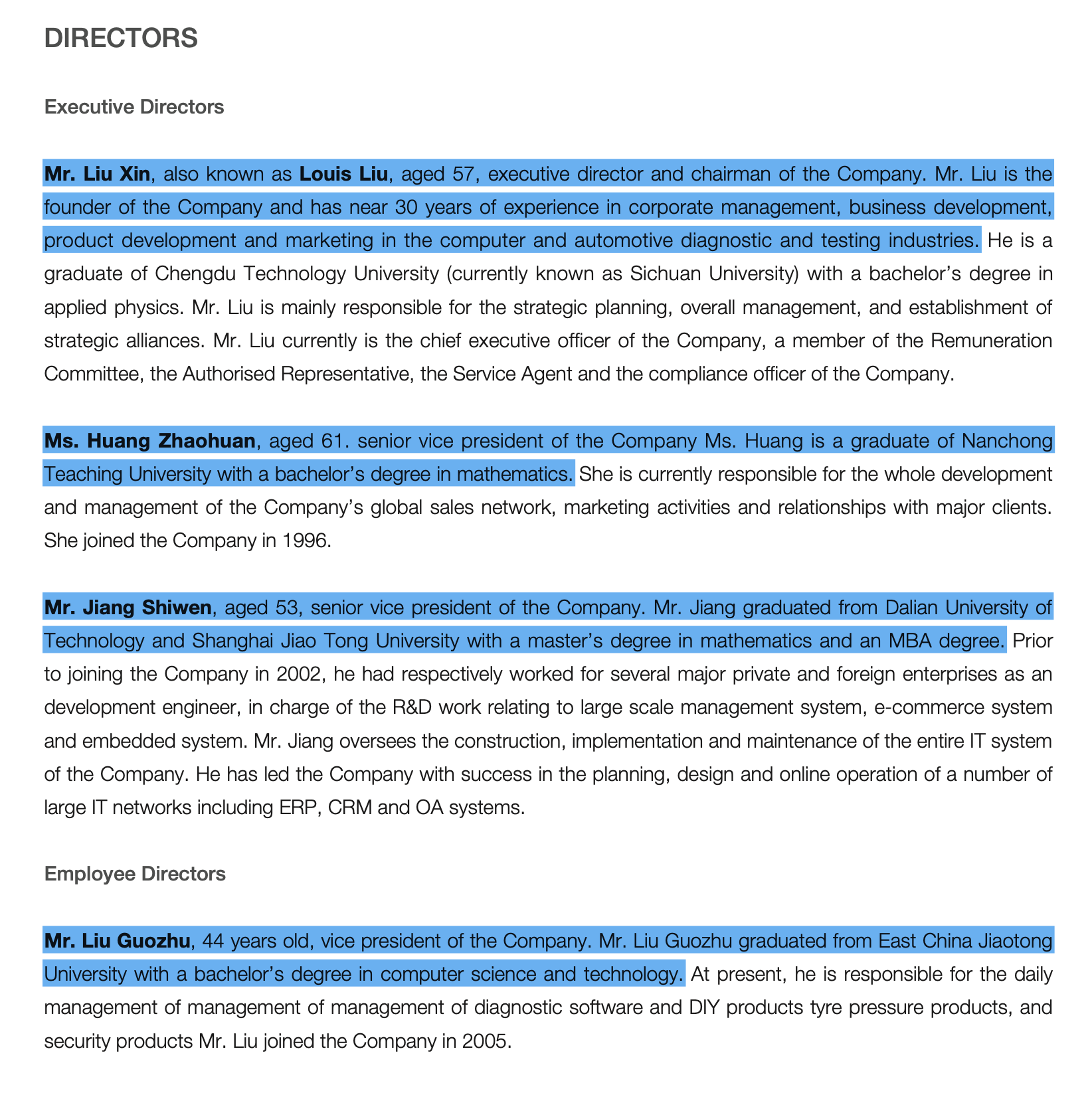
Launch Tech’s founder, Louis Liu Xin (刘新), appears to have stepped back from the company’s daily operations.
During the AGM, he spent considerably more time discussing traditional Chinese medicine than matters directly related to the business. This gave me the impression that he is no longer deeply involved in day-to-day management.
However, he has not disappeared from the company. He attended the 2026 LAUNCH Distributor Conference in Beijing and subsequently appeared at AAE 2026 in Melbourne. He continues to be present at major events involving customers, distributors and employees.
My interpretation is that Louis is now acting more as a founder, figurehead and cultural leader, while leaving operational responsibilities to the professional management team.
Succession appears to have been handled well
One of my most important takeaways from the AGM was that Launch Tech does not appear overly dependent on its founder.
Each major business function was represented by a senior executive who could answer detailed questions from shareholders. The management team appeared knowledgeable, experienced and familiar with the operational issues within their respective departments.
This gave me greater confidence that Louis has prepared the company’s succession carefully. The operating structure appears sufficiently developed for the business to function without requiring the founder to be involved in every decision.
Senior management also appears reasonably aligned with shareholders through the company’s H-share award scheme. While share-based incentives do not guarantee good capital allocation or execution, they should encourage management to focus on the company’s longer-term value.
Memory costs are the main near-term concern
The most significant near-term risk is the sharp increase in memory prices.
This is not a problem unique to Launch Tech. Higher memory and electronic-component costs are affecting many companies that manufacture devices containing computing hardware.
Launch Tech appears to have responded proactively by reserving approximately one year of its memory requirements. This reduces the risk of component shortages and provides greater certainty over production.
However, securing supply does not eliminate the higher cost. The company will still have to absorb substantially more expensive components, which will place pressure on gross margins and profitability.
I therefore expect gross margins to decline in the near term. Management may be able to partially offset this through:
higher selling prices;
reduced promotional discounts;
a more favourable product mix; and
continued growth in higher-margin software revenue.
Nevertheless, investors should not assume that the cost increase can be passed on immediately or in full. There may be a period in which revenue continues to grow while profit growth remains weaker because of margin compression.
International expansion remains the key growth driver
Despite the near-term margin pressure, I remain constructive on Launch Tech’s longer-term prospects.
The company’s expansion in the United States and Europe should continue to support market-share growth. Greater international scale should also improve its competitive position by allowing it to spread research, software-development, distribution and marketing costs across a larger revenue base.
The increasing overseas presence of Chinese automobile brands may provide an additional structural tailwind. As more Chinese vehicles are sold internationally, workshops and service centres will require diagnostic tools that can support these models
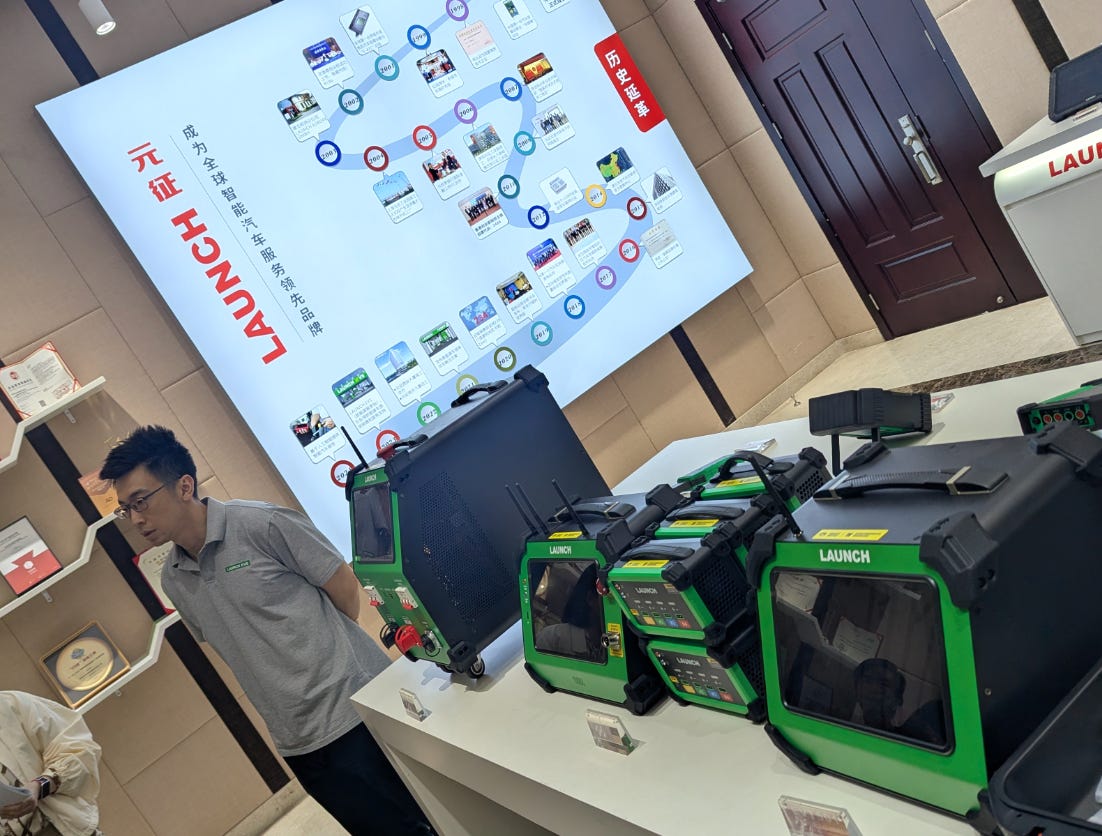
Launch Tech should be well positioned to benefit because of its familiarity with Chinese vehicle manufacturers and its established diagnostic capabilities. This could strengthen demand for both its hardware and its accompanying software services.
Software revenue is becoming increasingly important
The rapid growth in software revenue is another positive development.
Hardware sales can be cyclical and exposed to component-cost fluctuations. Software subscriptions, updates and diagnostic databases should generally provide a more recurring and potentially higher-margin revenue stream.
As software becomes a larger proportion of total sales, Launch Tech’s earnings quality could improve. It may also strengthen customer retention, as users who rely on Launch Tech’s diagnostic ecosystem have a greater incentive to continue renewing their software and purchasing compatible devices.
The key question is whether software growth can become large enough to materially offset pressure from hardware margins. This is an area I intend to monitor closely.
Overall assessment
My view of Launch Tech has become more positive following the AGM.
The founder appears to have stepped back without leaving a management vacuum. The operating team seems competent, succession appears to have been planned properly, and management incentives are reasonably aligned with shareholders.
The company still faces meaningful risks. Memory costs are likely to pressure gross margins, tariffs remain a concern, and international expansion will require continued investment. However, its growing presence in the United States and Europe, increasing software revenue and exposure to the global expansion of Chinese vehicle brands provide credible avenues for long-term growth.
Compared with Pax Global, Launch Tech appears to be doing a better job of growing its software business.
The near-term numbers may be affected by component costs, but the underlying business appears to be moving in the right direction.
SG to Chongqing

The following week I was flying again to China for Qingling’s EGM.
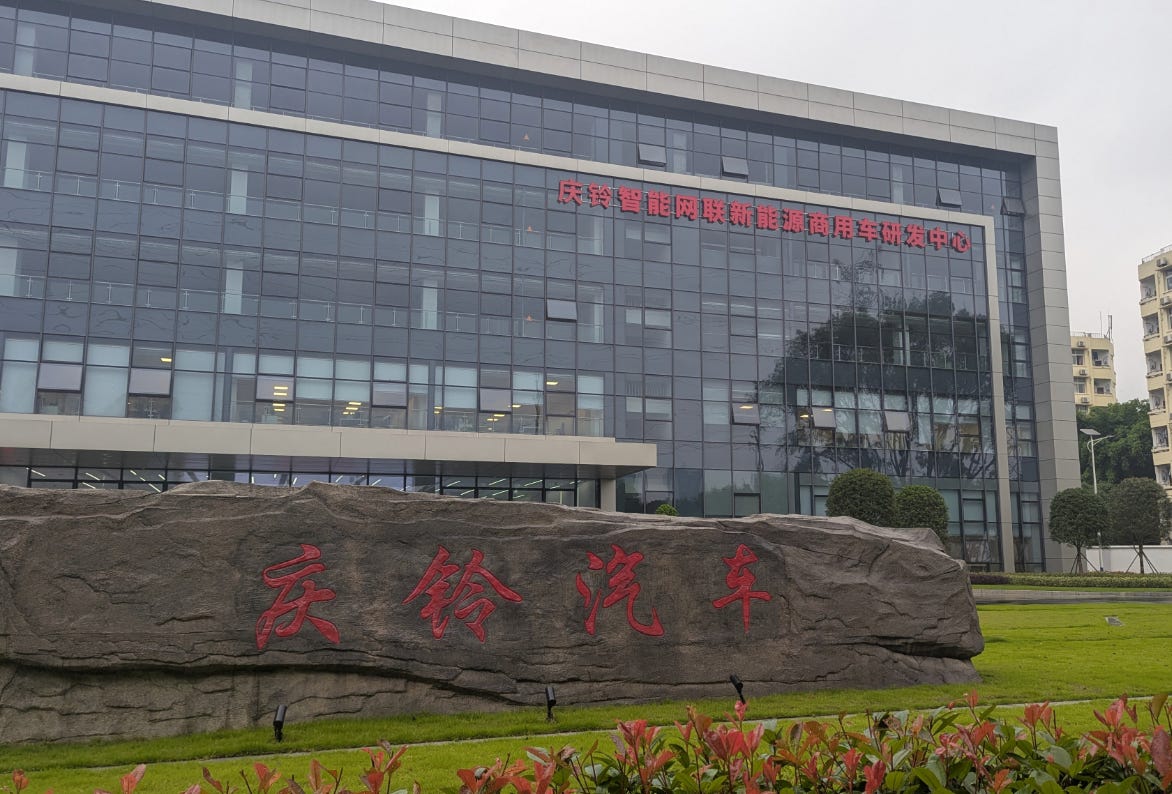
What initially attracted me to the company was that, for the first time, management had issued a sales-volume target for its trucks. As Qingling was trading at a net-net valuation, the investment case appeared relatively straightforward: if vehicle sales were genuinely recovering, the shares could offer substantial upside from a very depressed valuation.
My initial assumption was that the Chinese government’s concerted push to electrify heavy-duty vehicles was beginning to drive demand. If industry volumes were rising, this could potentially lift all manufacturers and ease some of the severe pricing pressure within the sector.
The actual explanation for Qingling’s sales guidance, however, was much simpler.
Management now has better visibility over its order pipeline because many electric heavy-duty vehicles are purchased for specific projects, particularly at ports. These projects generally have clearly defined requirements regarding the number of vehicles to be deployed and their technical specifications. As a result, Qingling can estimate its expected sales volumes with greater confidence than before.
While this improved visibility is encouraging, it does not mean that the industry’s structural problems have disappeared. Pricing competition remains intense, and I expect this pressure to continue.
My base-case expectation is that Qingling may return to a small profit, but investors should not expect the margins achieved during its better years. The commercial-vehicle industry is changing rapidly, and the transition towards electric heavy-duty vehicles remains economically complicated.
There is little doubt that electric heavy-duty vehicles are becoming increasingly viable from a technical perspective. However, actual sales and economic returns still depend heavily on financial engineering by both vehicle manufacturers and battery suppliers. Attractive financing arrangements, battery-leasing structures and other subsidies or incentives are often required to make the economics acceptable to customers.
At the same time, Qingling’s traditional Isuzu-based workhorse models are likely to decline gradually over the coming years. Investors should expect a larger proportion of future sales to come from Qingling-branded vehicles.
This transition will require the company to shoulder responsibilities that were previously supported by the strength of the Isuzu brand. Qingling will need to spend more on marketing, direct sales, brand building, distribution and after-sales support.
That creates a difficult situation. If industry margins remain depressed while Qingling has to invest more heavily in building its own brand and distribution infrastructure, the company could face a prolonged period of weak profitability.
The improved sales visibility is therefore a positive development, but it should not be confused with a return to the economics of the past. Qingling may be approaching a cyclical recovery in volumes, while still facing a much more challenging long-term business model.
Chongqing to Beijing
Beijing, the heartland of China’s state-owned enterprises, was my next stop. I visited two SOEs in a single day before continuing to Shenzhen.
The main takeaway was that conditions in China remain difficult. Many local governments are still under severe financial pressure. As a result, SOEs that traditionally provide services to local authorities have become increasingly selective about whom they are willing to work with.
In practice, this often means focusing on financially stronger first-tier cities while avoiding projects in the rest of China. However, if every company is adopting the same approach, it raises an important question: what is happening in the second- and third-tier cities that are being left behind?
Beijing to Shenzhen
I never particularly liked Shenzhen in the past, but the city is gradually growing on me.
What I increasingly appreciate is its melting pot of people from across China, many of whom have come to the city with a strong determination to improve their lives. In that respect, Shenzhen reminds me somewhat of Singapore.
Natural Food
Natural Food’s AGM is becoming increasingly crowded, which is hardly surprising given the company’s consistently strong operational performance.
The new supermarket model pioneered by Pang Dong Lai appears to have given the company a meaningful advantage. Supermarkets are placing greater emphasis on product quality and are actively seeking out reliable manufacturers such as Natural Food.
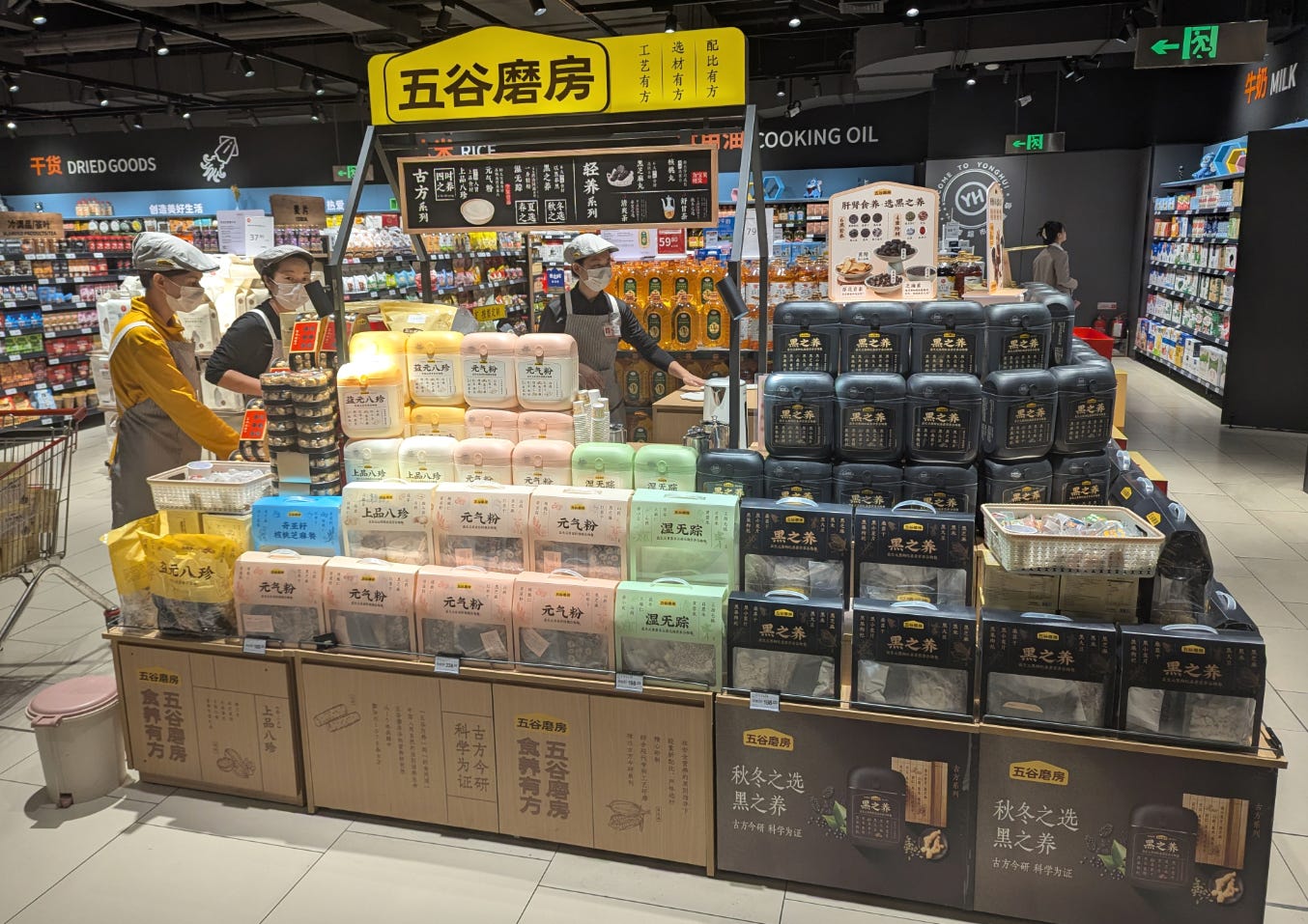
Following the rise in its share price and several recent additions to my position, Natural Food has become my third-largest holding, behind Thakral and Fairfax India.
Perfect Medical
I also met Peter from Perfect Medical.
At the time, the shares were trading close to their 52-week low. One positive was that investor interest in the company appeared almost non-existent. Another was that Hong Kong’s economy seemed to be showing early signs of improvement.
As is often the case in Hong Kong, the recovery in consumer spending may be linked to improving sentiment in the property market. Water Oasis, another Hong Kong-listed beauty and wellness company, also appears to be performing more strongly.
I was fortunate to purchase Perfect Medical close to the bottom. The share price has since recovered, and my entry price also provides a dividend yield of approximately 5%, which I expect to receive in the coming months.
YesAsia
YesAsia was another company I visited.
Operationally, the business appears to be doing reasonably well, although the share price suggests otherwise. Given the company’s strong reported revenue growth, the market appears to be pricing in a significant collapse in margins.
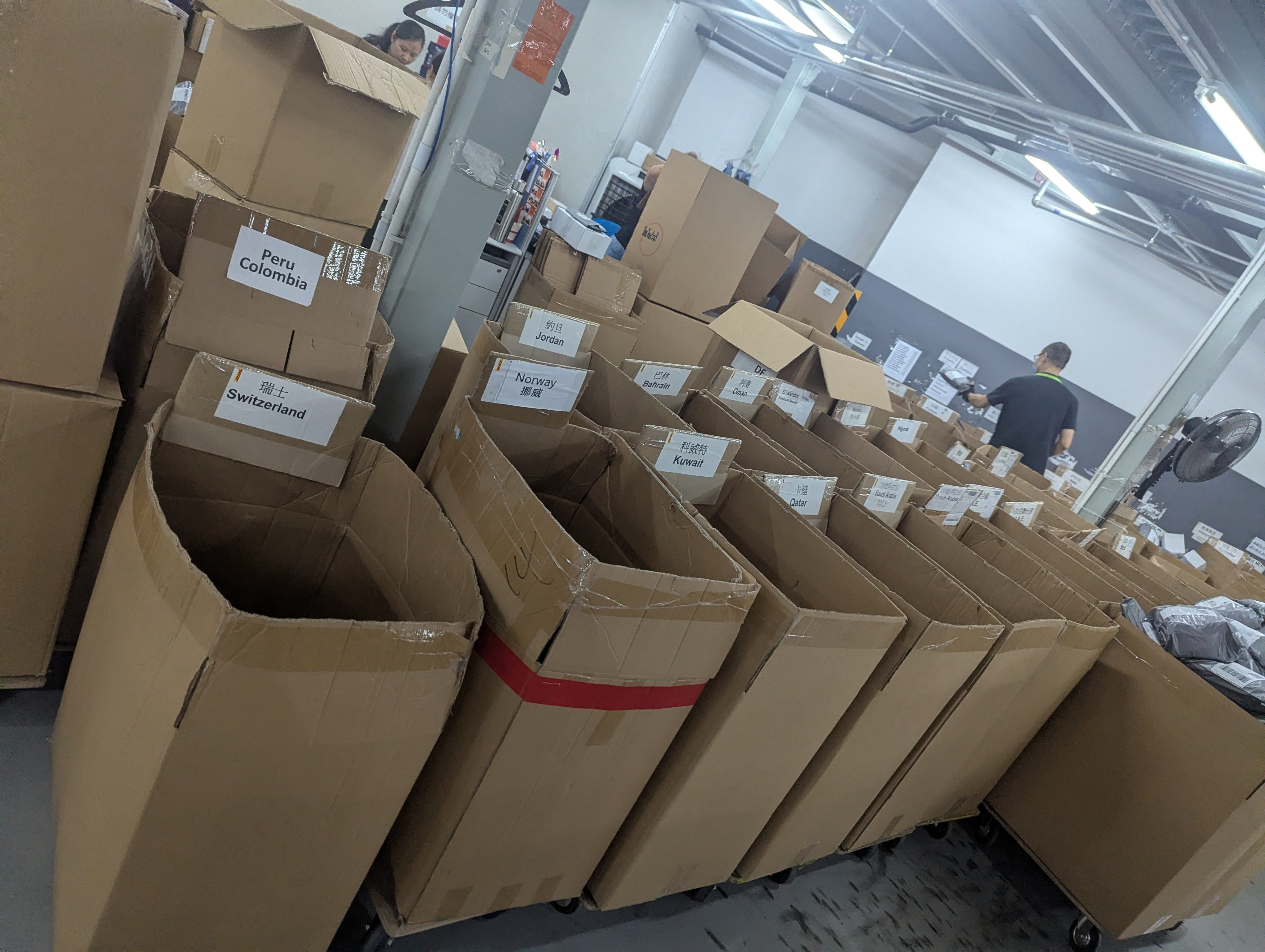
That is certainly possible, but I do not expect the outcome to be as disastrous as the market seems to fear. One useful way to assess YesAsia is to compare it with its Korean competitor, Silicon2.
Unlike Silicon2, YesAsia began as a business-to-consumer platform, with influencers and key opinion leaders playing an important role in driving sales. Its subsequent expansion into business-to-business wholesale means that management must now operate two distinct business models.
This can be viewed either as a distraction or as the development of a second engine for growth.
I am inclined towards the latter interpretation. Major K-beauty brands need alternatives to Silicon2 and Olive Young, and YesAsia could become one of the platforms they choose to support.
Its role as a beauty-products wholesaler also means that YesAsia does not have to remain dependent solely on Korean beauty. Over time, it could potentially distribute Japanese, Chinese and other Asian beauty brands as well.
I have initiated a small position in YesAsia and intend to build it gradually, particularly if the anticipated margin pressure causes further weakness in the share price.
E-Star Commercial Management
I also attended E-Star Commercial Management’s AGM.
E-Star appears to be at a crossroads. Retail sentiment in China continues to weaken, yet the number of new shopping malls opening in Shenzhen seems to be accelerating.
If consumer spending is being spread across a growing number of malls, the economics for individual shopping centres could become increasingly difficult. More retail space competing for the same pool of consumers is unlikely to be positive for profitability.
This uncertainty helps explain why E-Star has remained extremely conservative with its cash. The company has continued to distribute most of its earnings as dividends but has avoided making any major use of its accumulated cash holdings.
The acquisitions that were previously discussed never materialised, largely because the retail environment continued to deteriorate. In hindsight, this restraint may have been sensible.
I continue to value the support E-Star receives from its parent company, Galaxy Holding, which provides projects to the group. For the time being, E-Star may need to rely on its parent until the operating environment begins to improve.
Overall, I came away with a favourable impression of the management team. They stayed behind after the AGM and answered most of the questions raised by shareholders.
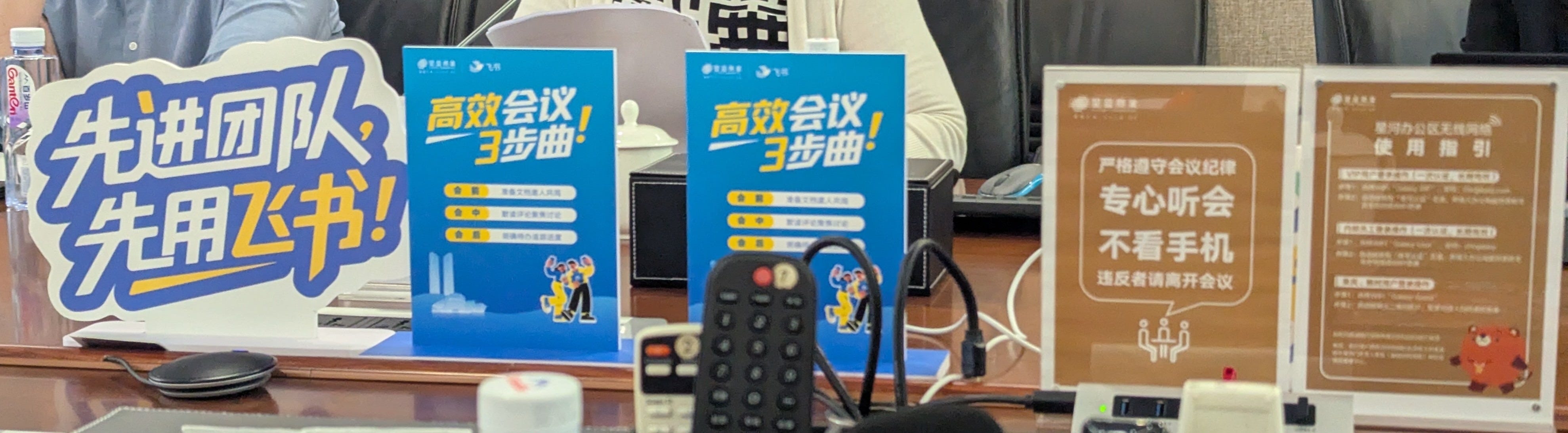
They appeared sincere and refreshingly frank about the challenges facing the business. Their options are limited by the broader economic conditions in China, and I agree with their view that doing nothing can sometimes be the most rational decision in an uncertain environment.